

If you are eating reasonably well, exercising regularly and still noticing that your waistline is slowly increasing, it is natural to wonder whether something else could be going on.
Could your gut bacteria be part of the story?
Possibly. But the answer is more complicated than the popular idea that “good bacteria burn fat.”
The trillions of microorganisms living in the digestive tract interact with the food we eat, our intestinal cells, immune system, metabolism and nervous system. Research over the past decade has found associations between the gut microbiome and obesity, insulin resistance, inflammation, appetite regulation and metabolic health.
At the same time, the relationship works both ways. What we eat influences the microbiome, and the microbiome can influence how the body processes components of that food.
This is particularly interesting in South Asian populations, including India, where metabolic disease can occur at lower levels of body mass index than in many Western populations. South Asians tend to accumulate more visceral and ectopic fat, and an apparently modest body weight does not always mean low metabolic risk.
But the microbiome is only one part of this picture.
Understanding that distinction is important if we want to move beyond the marketing claims surrounding gut health and weight loss.
The gut microbiome is the community of microorganisms and their genetic material living primarily in the gastrointestinal tract.
Bacteria are the best known members, but the ecosystem also includes fungi, viruses, archaea and other microorganisms.
These organisms are not simply passengers. They interact with each other and with their human host. They help process components of food that our own digestive enzymes cannot completely break down, produce metabolites, modify bile acids and communicate with intestinal and immune cells.
One important group of microbial metabolites is short chain fatty acids, including acetate, propionate and butyrate. These are produced largely when microorganisms ferment dietary fiber and other carbohydrates that reach the colon.
Short chain fatty acids can be used by intestinal cells and can influence immune, metabolic and hormonal pathways.
However, there is no single microbiome that defines a healthy person.
Your microbiome is influenced by diet, age, genetics, geography, medications, antibiotic exposure, physical activity, sleep, stress, environment and health conditions. Even people living in the same household can have substantially different microbial communities.
That is why the old idea of simply dividing bacteria into “good” and “bad” is no longer adequate.
What matters is the ecosystem, the functions being performed, the metabolites being produced and the interaction between the microbes and their host.
The gut microbiome varies considerably between populations around the world.
Research comparing Indian and Western populations has identified differences in gut microbial communities. More recent shotgun metagenomic research has also found that Indian immigrants and Indo Canadians can experience changes in their microbiomes associated with dietary acculturation and a more industrialised food environment.
Earlier research comparing populations from Kerala and Madhya Pradesh also found microbial differences associated with dietary patterns.
This does not mean there is one “Indian microbiome.” India is far too diverse for that.
A person eating a traditional plant rich diet in rural India may have a very different microbial ecosystem from someone living in an urban environment and consuming a diet dominated by packaged foods.
The same principle applies globally.
Food culture, geography and lifestyle all influence the microbiome.
India is simply an especially useful example because its traditional food systems contain considerable plant diversity, while rapid urbanisation is changing how many people eat and live.
Researchers are investigating several possible pathways.
These include energy metabolism, microbial metabolites, appetite signalling, bile acid metabolism, intestinal barrier function, inflammation, insulin sensitivity and communication between the gut and brain.
The evidence supports a role for the microbiome in metabolic regulation. It does not support the idea that one bacterium causes obesity or that taking a particular probiotic automatically results in weight loss.
When undigested carbohydrates and fiber reach the colon, microorganisms ferment them and produce metabolites such as short chain fatty acids.
These compounds can influence intestinal cells and metabolic signalling.
This means the microbiome participates in the way components of food are transformed into biologically active molecules.
But it would be misleading to say that people with more gut bacteria simply extract more calories from their food.
Research on short chain fatty acids and obesity is considerably more complicated. Some studies have even found higher fecal concentrations of short chain fatty acids in people with obesity.
The biological effect depends on which metabolites are produced, where they are produced, how they are used and the metabolic environment of the individual.
Hunger is controlled by a sophisticated communication network involving the brain, digestive tract, hormones, nutrients and microbial signals.
Hormones such as GLP 1, PYY, CCK and ghrelin influence appetite, satiety, gastric emptying and food intake.
Microbial metabolites can interact with some of these pathways. Short chain fatty acids, for example, can activate receptors on intestinal cells and influence the release of hormones including GLP 1 and PYY.
This creates an intriguing connection between diet, the microbiome and the brain.
What you eat influences what reaches the colon. What reaches the colon influences microbial activity. Microbial activity produces metabolites, and those metabolites can influence intestinal signalling.
Much of the mechanistic evidence, however, comes from laboratory and animal research. Human evidence is still developing.
So it is reasonable to say that the microbiome participates in appetite regulation.
It is not reasonable to promise that a particular probiotic will “switch off hunger.”
Visceral fat is metabolically active and is associated with inflammatory signalling and metabolic dysfunction.
Changes in the gut microbiome have also been associated with intestinal permeability, microbial metabolites and inflammatory pathways.
Researchers are investigating how these relationships may influence insulin sensitivity and metabolic health.
But there is an important limitation.
A microbiome associated with obesity may partly be a consequence of obesity, dietary changes or reduced physical activity rather than the original cause.
The relationship is probably bidirectional.
One of the most persistent claims in popular gut health content is that people with obesity have more Firmicutes and fewer Bacteroidetes.
The idea came from early research suggesting that the balance between these major bacterial groups might be associated with obesity.
It is an appealing explanation, but human research has not consistently supported it.
The problem is that these are very broad bacterial groups. Two people can have very different species within the same group, with very different functions.
Modern microbiome science is therefore moving beyond a simple question of which bacteria are present.
The more useful question is increasingly:
Shotgun metagenomics, metatranscriptomics and metabolomics allow researchers to investigate microbial species, genes, pathways and metabolites.
For a complex condition such as obesity, this functional perspective is far more informative than reducing the microbiome to one bacterial ratio.
There is evidence connecting the gut microbiome with adiposity and metabolic health, but it would be inaccurate to say that gut bacteria directly cause belly fat.
Abdominal and visceral fat are influenced by genetics, age, sex hormones, diet, physical activity, sleep, stress, medications, alcohol intake, insulin sensitivity and muscle mass.
The issue is particularly important for South Asians.
South Asian populations tend to develop greater central and visceral adiposity and metabolic complications at lower BMI levels than many European populations. Recent research has also highlighted the importance of ectopic fat, reduced muscle mass and limited pancreatic beta cell reserve in Asian metabolic risk.
This means that waist circumference and body composition can sometimes provide more useful information than body weight alone.
Someone with a “normal” BMI but increasing abdominal fat may still have significant metabolic risk.
The microbiome may be one factor interacting with this biology, but it should never be considered the sole explanation.
There is no single Indian diet, just as there is no single Mediterranean, Asian or Western diet.
Across India, traditional food systems have included pulses, vegetables, fruits, whole grains, millets, nuts, seeds, spices and many forms of fermentation.
Many of these foods provide different types of fiber and plant compounds that can be used by gut microorganisms.
This is one reason dietary diversity matters.
A diverse diet gives the microbiome a wider range of substrates than a diet dominated by a small number of highly processed foods.
Indian food traditions also offer an important lesson for the rest of the world: healthy eating does not have to be complicated or expensive. Many traditional meals combine plant foods, protein, whole grains, spices and fermented foods in practical ways.
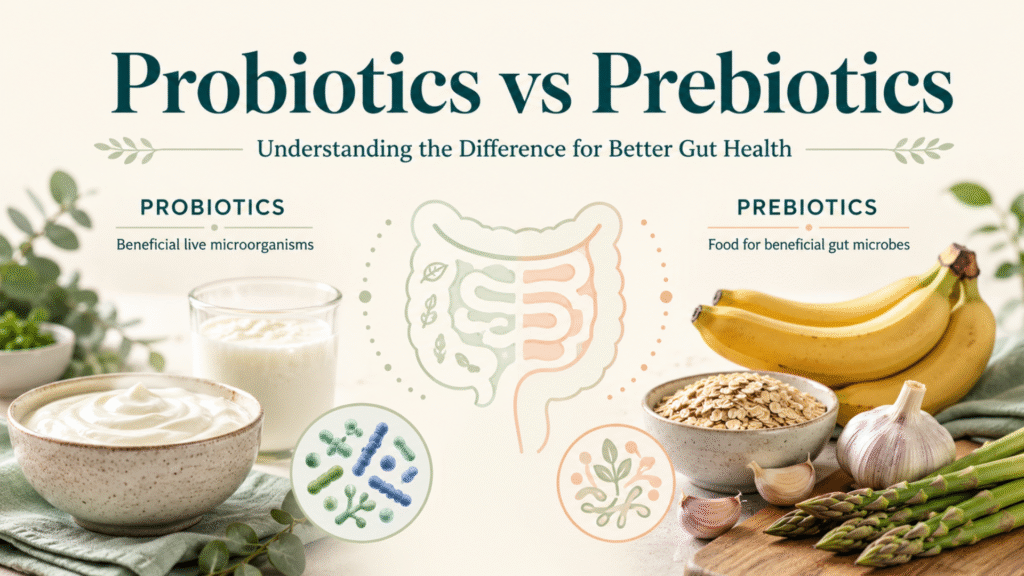
There is, however, an important distinction between fermented foods and probiotics.
Foods such as idli, dosa and dhokla are made using fermentation, but they are cooked before consumption. They may contain fermentation derived compounds and can be nutritionally valuable, but they should not automatically be described as probiotic foods.
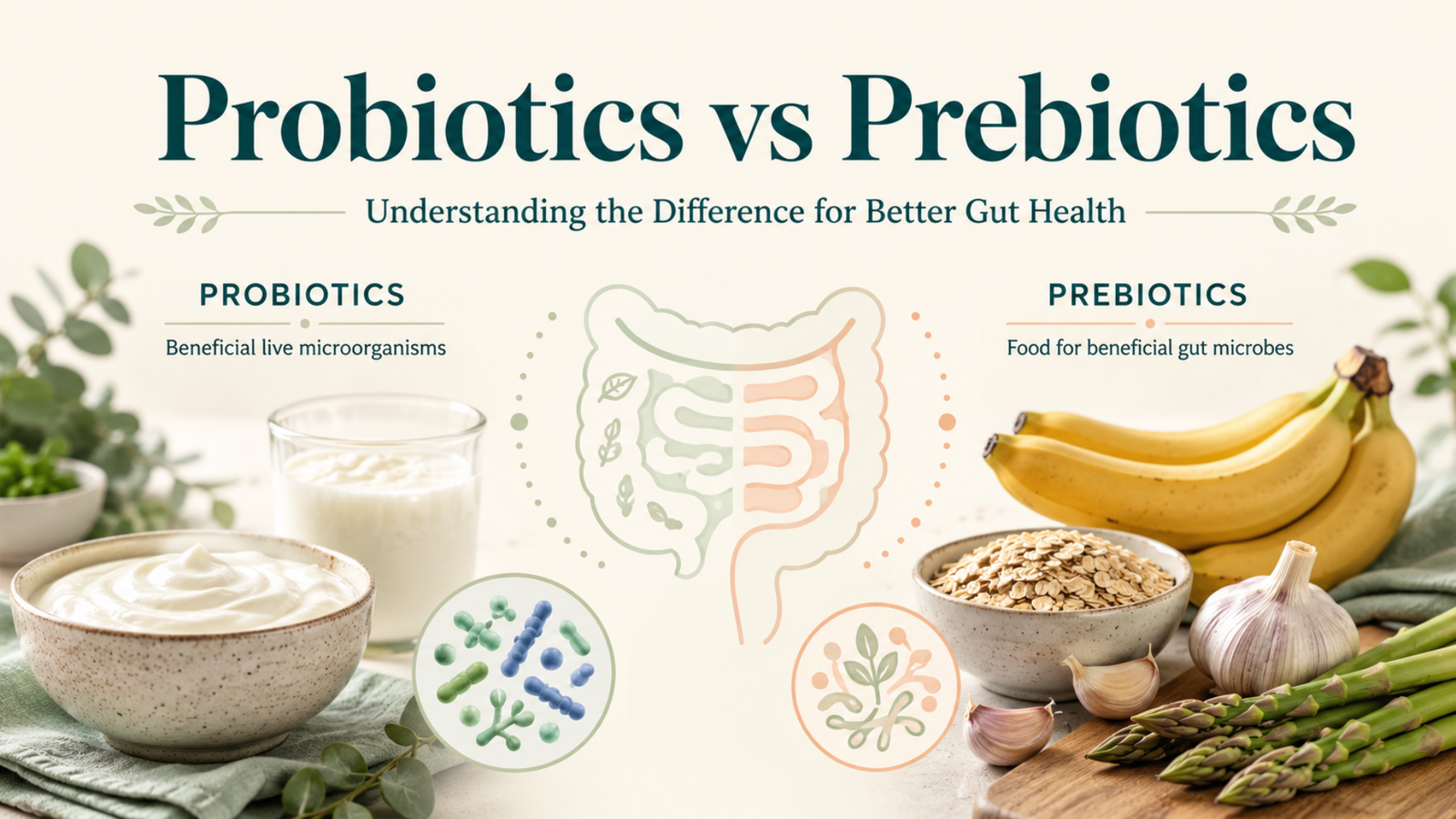
A probiotic is a specific live microorganism that has been administered in an adequate amount and shown to provide a health benefit.
Fermented foods and postbiotic foods are different concepts.
You do not need a fashionable “gut diet.”
Start with variety.
Eat a broad range of vegetables, fruits, pulses, whole grains, millets, nuts, seeds, herbs and spices.
Include legumes such as lentils, chickpeas, kidney beans, peas and other beans regularly. They provide fiber as well as plant protein.
Choose whole grains and minimally processed carbohydrates more often. Rice and wheat do not need to be eliminated. The bigger issue is whether refined grains and highly processed foods dominate the diet.
Include fermented foods if you tolerate them.
Reduce the frequency of ultra processed foods, particularly when they displace vegetables, legumes, whole grains and other sources of fiber.
If your current diet is low in fiber, increase it gradually. A sudden increase can cause bloating and gas.
Adequate fluid intake is also important, particularly when substantially increasing fiber.
And do not forget movement. Physical activity supports insulin sensitivity, muscle mass and cardiovascular health and may also influence the gut microbiome.
This is an area where advertising often runs ahead of evidence.
Probiotics and prebiotics may influence metabolic pathways, but they should not be promoted as stand alone weight loss treatments.
Clinical studies have shown potential benefits, but results are generally modest and inconsistent. Different probiotic strains can have completely different biological effects.
That means choosing a probiotic based only on the number of colony forming units is not enough.
The relevant questions are:
Is the specific strain supported by clinical research?
Is the dose appropriate?
What health outcome has actually been studied?
Is the formulation stable and suitable?
And is there a reason to use it for this particular person?
This is where personalised microbiome care becomes interesting, although it is important not to overstate what testing can currently tell us.
A microbiome test can provide information about the microorganisms and functional characteristics detected in a person's sample. Depending on the technology used, testing may provide considerably more information than simply reporting a broad bacterial ratio.
Shotgun metagenomic sequencing, for example, can identify microbial species and provide information about genes and potential metabolic functions.
However, a microbiome test cannot currently predict with certainty which probiotic will make someone lose weight.
Personalisation should mean more than giving someone a different supplement.
It should mean understanding the individual before deciding what intervention makes sense.
The microbiome does not live in isolation from the rest of the body.
Poor sleep can influence appetite, glucose metabolism and food choices. The microbiome itself also appears to follow daily rhythms.
Chronic stress can affect digestion, intestinal function, sleep and eating behaviour through the gut brain axis.
Antibiotics can substantially alter microbial communities. They are essential when medically indicated, but unnecessary courses should be avoided.
Physical activity supports metabolic health and may also influence microbial diversity and function.
In other words, there is no meaningful gut health strategy that ignores sleep, stress, movement and overall diet.
The microbiome is remarkably dynamic.
Dietary changes can produce measurable microbial changes within days, but that does not mean a health benefit will appear within days.
Longer term outcomes depend on maintaining the behaviours that created the change.
A useful way to think about the microbiome is as an ecosystem.
If you repeatedly provide a particular environment and food supply, certain microorganisms are more likely to thrive.
One week of healthy eating followed by months of highly processed food is very different from a sustainable dietary pattern.
And a change in microbial abundance does not automatically mean better health.
What ultimately matters is microbial function and the person's clinical outcome.
Possibly, but the microbiome should not be treated as a magic explanation for weight gain.
Sustainable weight management still depends on the broader picture:
The microbiome interacts with all of these factors.
That is why the future of weight management is unlikely to involve discovering one bacterium that makes everyone lean.
It is more likely to involve understanding how an individual's diet, microbiome, metabolism, genetics and lifestyle interact.
Perhaps the most encouraging message is that we do not need to search for a miracle food or a miracle bacterium.
Many traditional food cultures already provide the foundations of a microbiome supportive diet.
Indian cuisine is a particularly rich example. Pulses, vegetables, whole grains, millets, nuts, seeds, spices and fermented foods offer enormous variety.
The challenge is that modern diets often reduce this diversity while increasing refined carbohydrates and ultra processed foods.
A bowl of lentils, vegetables and whole grains is not simply traditional food. It provides a range of fibers and plant compounds that can support microbial activity.
A fermented food may provide fermentation derived compounds.
Regular movement supports metabolic health.
Sleep and stress influence the gut brain connection.
And when weight becomes difficult to manage despite sustained lifestyle changes, it is worth looking beyond calories alone.
Increasing waist circumference, insulin resistance, declining muscle mass, poor sleep, hormonal changes, medications and dietary quality may all contribute. The microbiome may be another piece of the puzzle.
That is where microbiome science has the greatest potential.
Not a magic pill. A more precise understanding of the person.
Precision nutrition for obesity management: A gut microbiota centered weight loss approach. Nutrition. 2025.