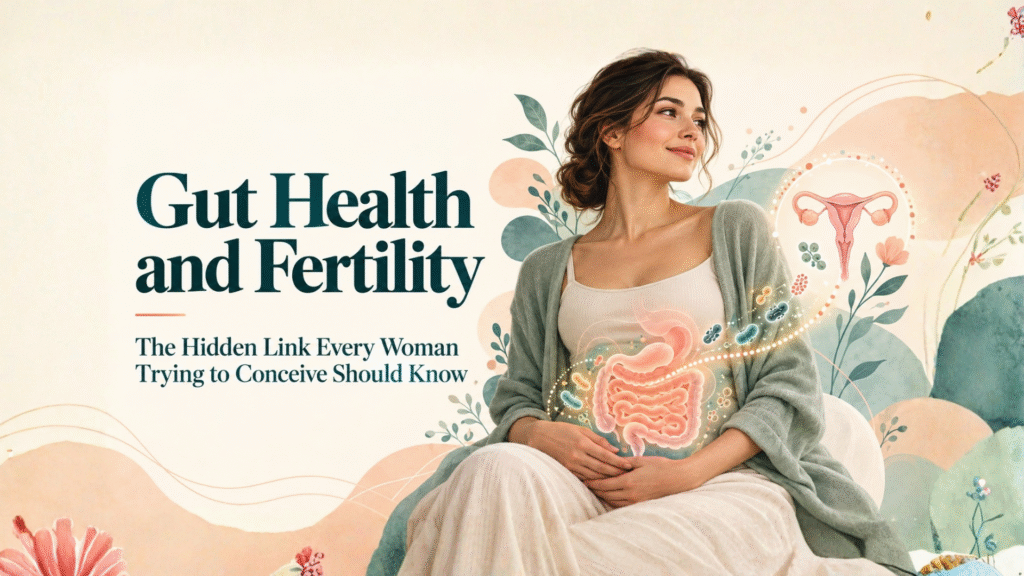

For a woman trying to conceive, the conversation usually begins with ovulation, hormones, egg quality, ovarian reserve, PCOS, endometriosis or fertility treatments.
But there is another system that is increasingly attracting the attention of researchers: the gut microbiome.
And there is a good reason for that.
The trillions of microorganisms living in our gut are involved in much more than digestion. They interact with our immune system, influence metabolism, produce biologically active compounds and participate in the processing of hormones.
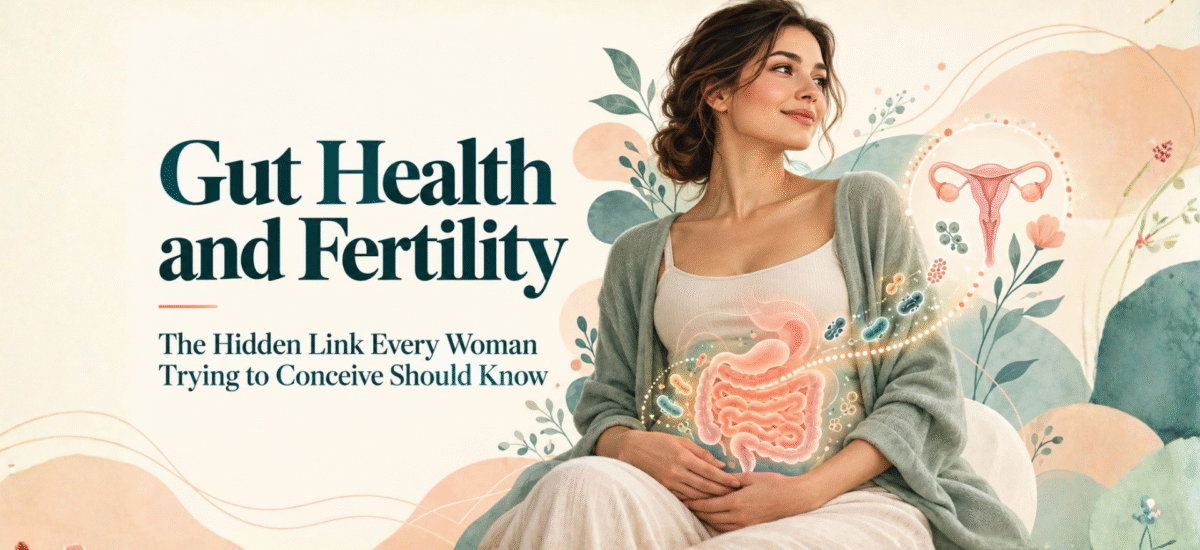
This has led researchers to investigate what is known as the gut-gonadal axis, the communication between the gut and the reproductive system. One of the most interesting areas within this research is the estrobolome, the collection of microbial genes involved in estrogen metabolism.
Could what happens in your gut influence your menstrual cycle, ovulation, hormones or reproductive health?
The answer appears to be more complicated than a simple yes or no.
There is growing evidence connecting the gut microbiome with conditions such as PCOS and endometriosis, and researchers are exploring its possible relationship with implantation and fertility outcomes. At the same time, much of this research is still developing. We cannot say that fixing gut dysbiosis will make a woman fertile or that taking a probiotic will guarantee pregnancy.
What we can say is that the gut is part of a much larger biological network involved in health and reproduction.
And that makes it worth understanding.
Think of the gut and reproductive system as two parts of a much larger conversation happening inside the body.
Your ovaries do not work independently. Ovulation is influenced by the brain, hormones, insulin sensitivity, inflammation, energy availability, nutrition and many other factors.
The gut interacts with several of these systems.
Your gut bacteria produce a wide range of substances as they metabolize the foods you eat and interact with the intestinal environment.
These include short-chain fatty acids such as acetate, propionate and butyrate, along with other microbial metabolites that can influence immune and metabolic pathways.
This matters because metabolism and reproductive health are closely connected.
Take insulin resistance, for example.
In women with PCOS, insulin resistance can contribute to increased androgen production by the ovaries. Higher androgen levels can interfere with normal follicle development and ovulation.
The gut microbiome is being studied for its possible role in this metabolic environment through its effects on inflammation, intestinal barrier function, bile acids and microbial metabolites.
The relationship works both ways, too.
Hormones influence the gut microbiome. The changing levels of estrogen and progesterone throughout the menstrual cycle can alter the intestinal environment.
So the relationship is not simply:
gut → hormones
It is a continuous conversation:
gut ↔ metabolism ↔ hormones ↔ immune system ↔ reproductive system
One of the most fascinating areas of gut and hormone research is the estrobolome.
The estrobolome is not one particular bacterium. It refers to the collection of microbial genes and enzymes involved in estrogen metabolism.
After estrogen is processed by the liver, some of its metabolites are excreted into the intestine. Certain gut bacteria produce an enzyme called β-glucuronidase, which can change these estrogen metabolites and influence whether they are reabsorbed into the circulation.
This means that the gut can participate in the way estrogen is processed and recycled.
Researchers are particularly interested in this mechanism in conditions involving estrogen, including endometriosis.
But we should be careful about how we interpret this science.
You will sometimes see statements online claiming that the estrobolome "controls estrogen" or that one particular bacterium is responsible for estrogen dominance.
Human biology is not that simple.
Estrogen metabolism involves the ovaries, liver, adipose tissue, gut, immune system and many other pathways. The microbiome is one participant in that process, not the master controller.
You may have heard researchers describe the gut microbiome as an "endocrine organ."
The phrase is useful, provided we understand what it means.
Gut microbes can produce and modify metabolites that interact with host signaling pathways. These microbial products can influence metabolism, immunity and potentially hormonal pathways.
The microbiome therefore has endocrine-like effects.
But it does not replace the ovaries, thyroid or other endocrine organs.
It is part of the network.
"Dysbiosis" is often used very loosely.
It does not simply mean that you have too many bad bacteria and not enough good bacteria.
A microbiome is an ecosystem. Its composition, diversity, functional capacity and interaction with the host all matter.
Researchers are investigating several possible ways in which alterations in this ecosystem could influence reproductive health.
Because gut bacteria participate in estrogen metabolism, researchers are interested in whether changes in microbial activity could alter estrogen availability.
This may be particularly relevant to estrogen-sensitive conditions.
The gut may also influence fertility indirectly through metabolism.
Insulin resistance and chronic low-grade inflammation can affect ovarian function, particularly in women with PCOS. The microbiome may interact with these pathways.
But it would be wrong to conclude that gut dysbiosis causes ovulatory problems in every woman.
Fertility is far too complex for that.
The immune system has a fascinating role in reproduction.
For an embryo to implant successfully, the uterus needs to create a carefully controlled environment that allows the embryo to attach and develop while maintaining appropriate immune protection.
The gut microbiome has a major influence on immune function.
This is one reason researchers are interested in whether gut microbial changes and altered immune signaling could influence reproductive health.
There is also increasing interest in the microbiome of the reproductive tract, particularly the vaginal and endometrial microbiota.
This is important because the vaginal or endometrial microbiome should not simply be equated with the stool microbiome.
Some studies have found associations between Lactobacillus-dominant reproductive tract communities and better outcomes in assisted reproduction. However, the evidence is still developing, and these findings do not mean that taking a Lactobacillus supplement will automatically improve implantation or pregnancy rates.
This is one of the questions women understandably ask.
Unfortunately, we do not yet have a microbiome test that can tell you whether your eggs are "good" or "bad."
Researchers are investigating whether microbial metabolites, inflammation, oxidative stress and metabolic health could influence the ovarian environment and oocyte quality.
Much of the more compelling mechanistic evidence comes from experimental and animal research, while human evidence is still emerging.
So I would not promise a woman that changing her microbiome will improve her egg quality.
What we can do is improve the factors that are within our control: nutrition, metabolic health, physical activity, sleep, stress management and digestive health, while addressing any medical fertility issues appropriately.
If there is one reproductive condition where the gut microbiome has received particularly strong research attention, it is PCOS.
PCOS is not one single disease with one single presentation.
One woman may have irregular periods and high androgen levels. Another may have insulin resistance and weight gain. Another may be lean, have irregular ovulation and experience significant hormonal symptoms.
This variation matters when we talk about gut health.
A number of studies have found differences in the gut microbiome of women with PCOS compared with women without PCOS.
A systematic review and meta-analysis involving 28 studies and almost 2,000 participants found differences in microbial diversity and composition among women with PCOS. The researchers also identified changes in pathways involving short-chain fatty acids and bile acid metabolism. (pubmed.ncbi.nlm.nih.gov)
These findings are interesting.
But they raise another question:
The answer may actually be both.
Diet, insulin resistance, medications, body composition, age and other factors also influence the microbiome.
So finding a microbial difference does not automatically mean that bacterium caused the disease.
Many women have been told that they need to "increase their gut diversity."
Diversity can be an important feature of a healthy ecosystem, but it is not the whole story.
A microbiome is not healthy simply because it contains a large number of different species.
We also need to understand what those microorganisms are doing.
Are they producing beneficial metabolites? How are they interacting with fiber? What is happening with bile acid metabolism? Are there signs of imbalance in the overall ecosystem?
This is why I prefer to look beyond a single diversity number.
One of the most interesting areas of PCOS research is the connection between the microbiome, insulin resistance and androgen excess.
Insulin resistance can increase insulin levels. In susceptible women, higher insulin can stimulate the ovaries to produce more androgens.
Androgen excess can then interfere with normal follicular development and ovulation.
The microbiome may interact with this system through inflammation, intestinal permeability, microbial metabolites and bile acid signaling.
This does not mean that a probiotic can "cure PCOS."
It means that gut health may be one of several modifiable components of the metabolic environment associated with PCOS.
The international PCOS guideline recommends healthy lifestyle intervention for women with PCOS and does not support one particular diet as being universally superior for reproductive or metabolic outcomes. (doi.org)
That is actually good news.
You do not need to follow a fashionable, extremely restrictive "PCOS diet."
You need a sustainable approach that works for your body.
PCOS is not the only condition where researchers are investigating the microbiome.
Endometriosis is an inflammatory, estrogen-dependent condition that can be associated with significant pain and infertility.
Several studies have reported differences in the gut microbiome of women with endometriosis.
A 2025 systematic review and meta-analysis found differences in gut microbiota diversity between women with endometriosis and controls, although the studies varied considerably in their methods. (pubmed.ncbi.nlm.nih.gov)
The estrobolome is also being investigated because of the role of estrogen in endometriosis.
A recent systematic review found evidence suggesting that altered microbial estrogen metabolism may be involved in the condition, but the available human evidence remains limited. (pubmed.ncbi.nlm.nih.gov)
This is an exciting area of research.
But it does not mean that endometriosis can currently be treated by "fixing the gut."
Medical diagnosis and treatment remain essential.
The microbiome of the female reproductive tract has become another area of intense research.
Some studies have found associations between Lactobacillus-dominant vaginal or endometrial microbiota and IVF outcomes.
A recent systematic review found that certain Lactobacillus-dominant profiles, particularly those involving Lactobacillus crispatus, were associated in some studies with implantation, clinical pregnancy and live birth outcomes. However, results were not completely consistent, and the authors highlighted significant variation between studies. (pubmed.ncbi.nlm.nih.gov)
This distinction is important.
A stool microbiome test is not a test for recurrent implantation failure.
The gut, vagina and endometrium are different ecosystems.
Thyroid function can have a significant impact on reproductive health.
Overt thyroid dysfunction can affect menstrual cycles and fertility, which is why thyroid evaluation may form part of a fertility work-up.
There is also growing research into the relationship between the gut microbiome and autoimmune thyroid disease.
But we do not yet have evidence that changing the gut microbiome can restore fertility in women with thyroid disease.
If thyroid dysfunction is present, it needs appropriate medical management.
Gut health can be addressed alongside it.
There is no symptom that can tell you, "Your gut is causing your fertility problem."
But your body may give you clues that your gut health deserves attention.
Look at patterns rather than isolated episodes.
Do you regularly experience:
These symptoms do not mean you have a fertility problem.
But if they persist, they should not simply be accepted as normal.
Your menstrual cycle can provide useful information too.
Irregular or absent periods, signs of androgen excess, severe menstrual pain or difficulty predicting ovulation deserve proper evaluation.
If you have PCOS, endometriosis, recurrent pregnancy loss or another reproductive condition, it is especially important to work with an appropriate healthcare professional.
Don't Wait Too Long for Fertility Evaluation
This is something I feel strongly about.
If you are having difficulty conceiving, do not spend a year trying to fix your gut before seeing a fertility specialist.
ASRM recommends infertility evaluation after 12 months of trying for women under 35 and after six months for women aged 35 or older. Women over 40 may benefit from earlier evaluation. Earlier assessment is also appropriate when there are known risk factors or irregular cycles. (asrm.org)
And remember that fertility involves two people.
Male fertility factors contribute substantially to infertility and should be evaluated when appropriate.
This is where we can move away from theory and talk about things you can actually do.
Start With Your Food
Your gut bacteria eat what you eat.
A diet containing a wide range of plant foods gives the microbiome different types of fiber and other compounds to work with.
Aim for variety rather than obsessing over one "superfood."
Include vegetables, fruits, legumes, whole grains, nuts and seeds according to your individual tolerance.
Include adequate protein.
Choose healthy fats.
Reduce excessive ultra-processed foods and added sugars.
And do not dramatically increase fiber overnight.
If you already have bloating or IBS-type symptoms, suddenly eating enormous amounts of fiber can make you feel worse.
Your gut needs time to adapt.
Fermented Foods Are Not Automatically Probiotics
This is another area where there is a lot of confusion.
Fermented foods can be valuable additions to a healthy diet.
But fermentation does not automatically make a food a clinically proven probiotic.
Some fermented foods contain live microorganisms. Others may contain microbial metabolites but no longer contain viable organisms in meaningful amounts.
And the presence of a microorganism in a food does not mean that it has been clinically proven to improve fertility.
Search for "best probiotics for fertility" and you will find dozens of products.
But there is no single probiotic that can currently be called the best fertility probiotic for every woman.
Different strains have different properties.
A probiotic used for a particular gastrointestinal indication cannot automatically be assumed to improve fertility.
The same applies to Lactobacillus.
Lactobacilli are important members of many healthy microbial ecosystems, but the effects are strain-specific and context-dependent.
Emerging research on reproductive tract microbiota is interesting, but it should not be translated into the simplistic message that every woman trying to conceive should take a Lactobacillus supplement. (pubmed.ncbi.nlm.nih.gov)
This is one reason I prefer testing and personalization rather than blindly taking probiotics.
Exercise, Sleep and Stress Matter Too
Your microbiome does not live in isolation.
Neither do you.
Physical activity, sleep, stress, medications, food and environment all influence your physiology.
Regular movement supports insulin sensitivity and metabolic health.
Adequate sleep supports hormonal and metabolic regulation.
Stress management matters because chronic stress can influence the gut-brain axis, eating behavior and sleep.
None of these is a magic fertility treatment.
Together, however, they create a healthier environment in which the reproductive system can function.
This is where I would ask a different question.
Not:
"Can a gut microbiome test tell me whether I am fertile?"
It cannot.
Instead:
"Could understanding my gut microbiome help me identify areas of health that I can work on while addressing my fertility?"
That is a much more meaningful question.
Depending on the technology used, a comprehensive microbiome test can provide information about microbial composition and, with shotgun metagenomic approaches, potentially a much broader picture of microbial functional potential.
This may include information relating to microbial diversity, specific organisms, functional pathways and microbial metabolic capabilities.
For a woman with digestive symptoms, PCOS, metabolic concerns or other health issues, this information may provide another layer of understanding.
But it should always be interpreted in context.
A microbiome report is not a diagnosis of infertility.
A stool microbiome test cannot tell you:
These require appropriate medical assessment.
I see microbiome testing as one additional layer of information.
If a woman has PCOS, for example, we can look at her metabolic health, menstrual pattern, nutrition, lifestyle and medical investigations while also asking whether her gut health could be optimized.
If she has significant digestive symptoms, we can investigate those rather than simply telling her to take a probiotic.
If she has been eating a very restricted diet because she is afraid of certain foods, we can ask whether she is actually getting enough fiber, protein and micronutrients.
The goal is not to make the microbiome responsible for everything.
The goal is to understand the individual more completely.
"If I fix my gut, I will become fertile."
Not necessarily.
Gut health may influence several biological pathways relevant to reproductive health, but infertility has many causes.
"Every woman trying to conceive should take probiotics."
There is no evidence for that blanket recommendation.
The strain, dose, reason for use and individual health profile matter.
"More bacteria means a healthier gut."
Not necessarily.
Microbial diversity is useful information, but a microbiome cannot be judged by one number.
"The estrobolome controls estrogen."
No.
The estrobolome participates in estrogen metabolism. It is one component of a much larger hormonal system.
"Endometriosis is caused by gut bacteria."
There are interesting associations between endometriosis and microbiome changes, but we do not yet know whether those changes are a cause, consequence or combination of several factors.
"I should eliminate gluten, dairy or carbohydrates to improve my fertility."
There is no universal fertility diet that requires these foods to be eliminated.
In PCOS, current international guidance does not identify one specific dietary composition as superior. (doi.org)
At Microbiome Superhero, we look at the microbiome as part of the person, not as an isolated collection of bacteria.
This is particularly important when we talk about women's health.
A woman may come to us because she has PCOS, bloating, irregular periods, difficulty managing her weight, hormonal symptoms or simply wants to understand whether her gut health could be better.
We begin by understanding the individual.
Where appropriate, microbiome testing can provide another layer of information. We then look at that information alongside diet, symptoms, lifestyle and relevant health concerns.
Our focus is not on finding a single "bad" organism and trying to eliminate it.
It is about understanding the ecosystem and identifying areas where nutrition, lifestyle, prebiotic strategies or targeted probiotics may be appropriate.
And when probiotics are used, we believe they should be selected for the individual rather than chosen simply because a product is marketed as a women's or fertility probiotic.
That is the difference between taking a supplement and taking a personalized approach.
Gut health may support several biological pathways associated with reproductive health, including metabolic health, inflammation and hormone metabolism. However, there is not yet enough evidence to say that improving the gut microbiome directly increases pregnancy rates in all women.
There is no single best PCOS diet.
The current international PCOS guideline recommends sustainable healthy eating tailored to the individual rather than one specific diet composition. A diet based largely on minimally processed foods, adequate protein, fiber and healthy fats can provide a strong foundation. (doi.org)
Some research into probiotics and reproductive tract microbiota is promising, particularly in assisted reproduction, but the evidence is not strong enough to say that a particular probiotic increases fertility for all women.
There is no single timeline.
Digestive symptoms may improve relatively quickly in some people, while meaningful changes in diet, metabolic health and the microbial ecosystem may take longer.
And we do not yet have a scientifically established timeline for translating microbiome changes into improved fertility outcomes.
For years, reproductive health has largely been discussed through the lens of hormones, ovaries, uterus and reproductive anatomy.
We now understand that these systems do not operate independently.
The gut communicates with the immune system.
The microbiome interacts with metabolism.
Microbial activity participates in hormone metabolism.
The immune system plays a role in implantation.
And the reproductive tract itself has its own microbial ecosystem.
That does not make the microbiome the answer to infertility.
But it does make it a fascinating and potentially important part of the picture.
The science around the gut-gonadal axis and estrobolome is still developing. Research in PCOS is particularly interesting, while work on endometriosis, implantation and reproductive tract microbiota is opening up new questions.
We should welcome that research without turning emerging science into promises that it cannot yet support.
For a woman trying to conceive, the most sensible approach is not to choose between conventional fertility care and gut health.
It is to address both appropriately.
Get the fertility evaluation you need.
Understand your hormones and metabolic health.
Eat well.
Move your body.
Sleep adequately.
Take care of your digestive health.
And if there is a reason to investigate your microbiome, use the information thoughtfully and in context.
Your gut is not separate from the rest of you.
And when it comes to fertility, understanding the whole person may ultimately be more valuable than focusing on any one system alone.
Take our Gut & Hormone Health Assessment to identify areas that may deserve attention.
If you are considering microbiome testing, personalized probiotics or nutrition support while trying to conceive, use them as part of a broader approach to health and continue working with your gynecologist or fertility specialist.
Because better health is personal. And your microbiome is personal too.