
If you are trying to improve your gut health, you have probably come across two words again and again: probiotics and prebiotics.
They sound similar and are closely connected, but they are not the same thing.
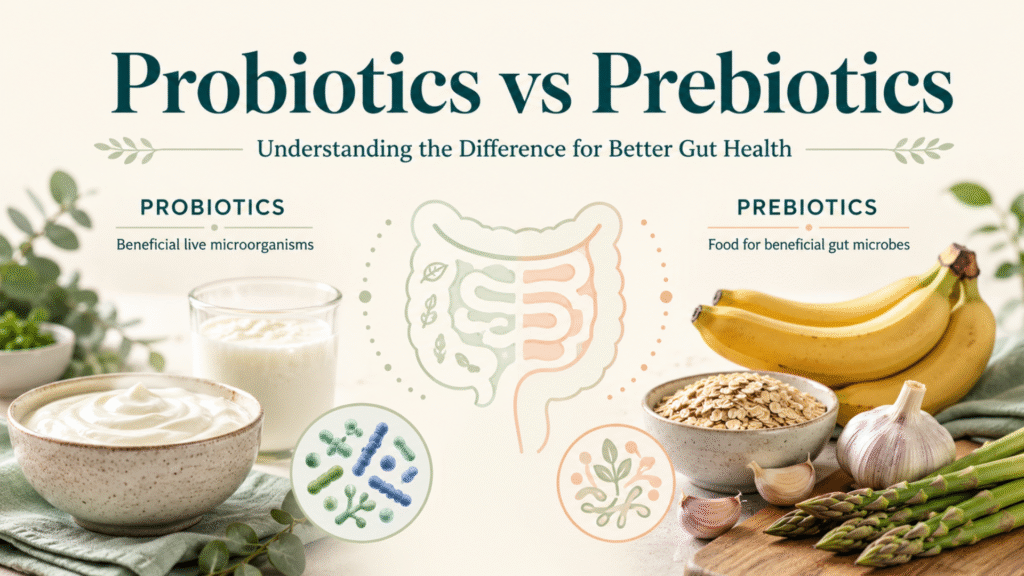
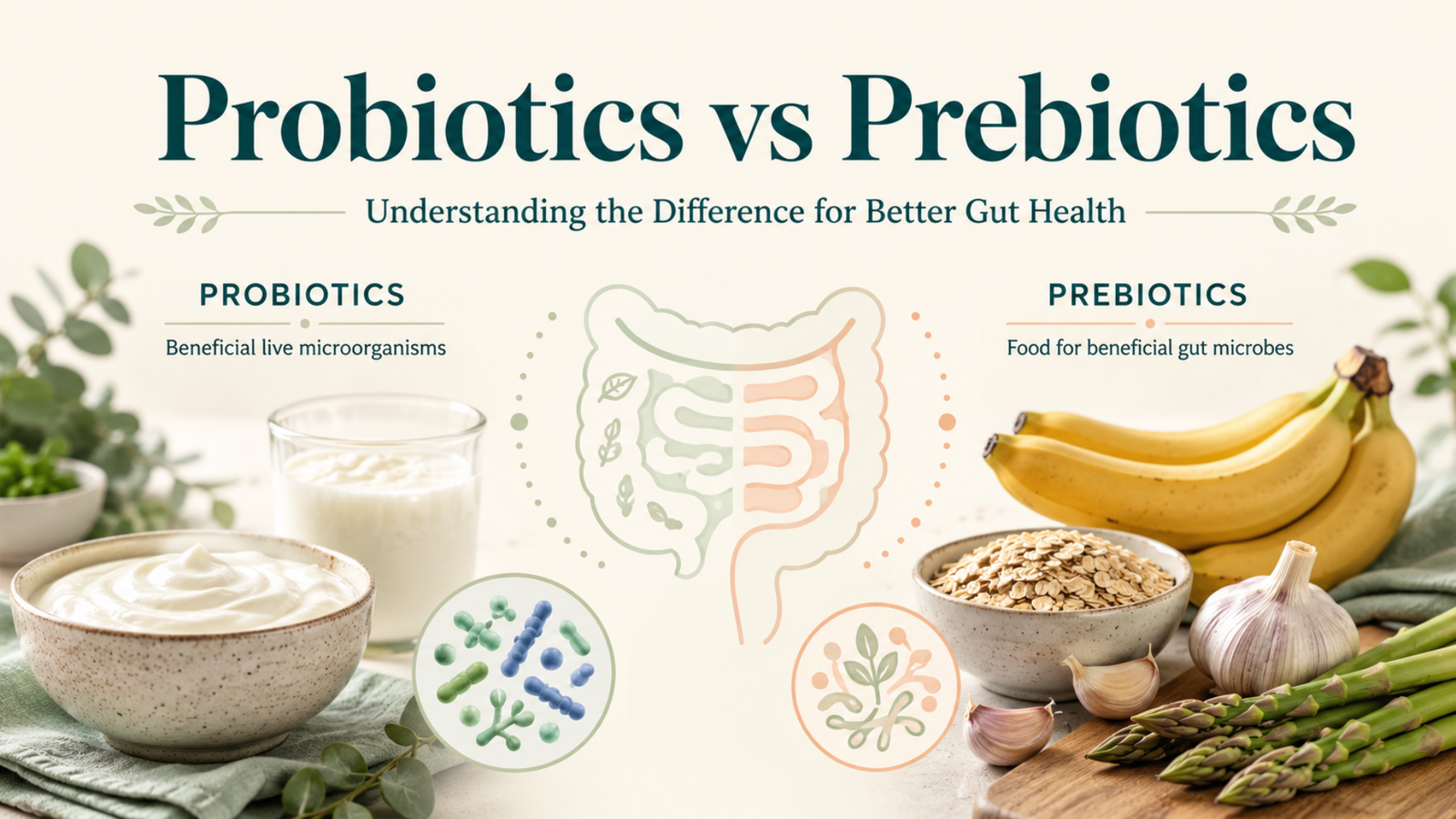
Probiotics are live microorganisms that provide a health benefit when consumed in adequate amounts. Prebiotics are substrates that are selectively used by microorganisms and provide a health benefit.
In simple terms, probiotics involve microorganisms, while prebiotics provide something that selected microorganisms can use.
This distinction matters when choosing supplements, increasing dietary fiber, managing digestive symptoms or simply trying to build a healthier gut ecosystem.
For an international audience, India offers an interesting perspective because fermentation has been part of its food culture for generations. Foods such as idli, dosa and dhokla are made through fermentation, but they should not automatically be called probiotic foods. Their fermented batter is subsequently cooked, which significantly reduces the number of live microorganisms. At the same time, fermentation can leave behind microbial components and metabolites that may contribute to the characteristics and potential health value of the finished food.
This is where the terms fermented foods, probiotics, prebiotics and postbiotics need to be clearly separated.
So, should you take a probiotic, increase prebiotic foods, or use both?
The answer depends on the individual, the health goal, the existing microbiome, diet, lifestyle and, when appropriate, the evidence supporting a particular intervention.
A probiotic is not simply a “good bacterium.”
The scientific definition requires a live microorganism that has been shown to provide a health benefit when consumed in adequate amounts.
Commonly studied probiotic microorganisms include specific strains from the Bifidobacterium and Lactobacillus groups, as well as certain yeasts.
The word strain is particularly important.
Different strains belonging to the same species can behave very differently. A strain studied for antibiotic associated diarrhea cannot automatically be assumed to help constipation, IBS, metabolic health or skin problems.
This is one reason that probiotic labels can sometimes be misleading.
A product may contain 20 strains or 50 billion CFU, but those numbers alone do not tell you whether it is the right product for you.
CFU means colony forming units and gives an indication of the number of viable microorganisms. More CFU does not necessarily mean a better probiotic.
A good probiotic product should provide information about the microorganism, strain where applicable, dose, storage requirements and the evidence supporting its intended use.
The more useful question is therefore not:
but:
The common idea that probiotics enter the gut, permanently colonize it and replace harmful bacteria is an oversimplification.
Many probiotic microorganisms do not permanently colonize the intestine. Instead, they may interact temporarily with the existing microbial ecosystem.
Depending on the strain and the individual, probiotics may influence microbial interactions, produce metabolites, interact with the intestinal lining, compete with other microorganisms, influence immune signaling and affect intestinal barrier function.
Their effects therefore depend on much more than the capsule itself.
Diet, medication, age, health status, existing microbiome, dose and duration of use can all influence the response.
This helps explain why two people can take the same probiotic and experience different results.
It also explains why there is no single probiotic that can be called the “best probiotic for gut health” for everyone.
Fermentation is one of the oldest methods of food preparation and preservation.
Indian cuisine provides many examples of traditional fermentation involving grains, legumes, vegetables and dairy.
Idli, dosa and dhokla are particularly interesting because their batters undergo microbial fermentation before cooking. During fermentation, microorganisms transform components of the food and produce metabolites and other fermentation products.
But the finished food should not automatically be described as probiotic.
A probiotic requires a defined live microorganism and evidence of a health benefit at an adequate dose. A fermented food is defined primarily by the process through which microorganisms transform the food.
Cooking creates another important distinction.
When a fermented batter is steamed, baked or otherwise heated, many of the live microorganisms are no longer viable. However, the effects of fermentation do not necessarily disappear. Fermentation can alter digestibility, acidity, nutrient availability and the chemical composition of the food.
It can also generate microbial metabolites and microbial components that remain in the food after cooking.
This is why idli, dosa and dhokla are better discussed in the context of postbiotic foods and fermentation derived products, rather than being described as probiotics.
The same principle applies to other fermented foods. Whether a food contains viable microorganisms depends on how it was fermented, processed, stored and prepared.
A useful distinction is:
Fermentation is a process. Probiotics are specific live microorganisms with demonstrated health benefits. Postbiotics involve inanimate microorganisms and/or their components that provide a health benefit.
Prebiotics are often described as “food for beneficial gut bacteria.” This is a useful introduction, but the scientific definition is more specific.
A prebiotic is a substrate that is selectively used by microorganisms and provides a health benefit.
Many prebiotics are fermentable carbohydrates. Examples include inulin, fructooligosaccharides, galactooligosaccharides and certain resistant starches.
But an important point is often overlooked:
Fiber is a broad category. Different fibers have different structures, fermentation characteristics and effects on the body.
Some are readily fermented by gut microorganisms. Others are less fermentable but may be important for stool bulk, bowel regularity and digestive health.
So, a food can be high in fiber without necessarily being a prebiotic food.
Think of the gut microbiome as an ecosystem.
Some components of the food we eat are not completely digested in the small intestine. They reach the colon, where microorganisms can use them.
When selected fibers and resistant carbohydrates are fermented, microorganisms produce metabolites such as acetate, propionate and butyrate.
These short chain fatty acids are important biological signals. They can influence intestinal barrier function, immune responses, microbial activity and metabolism.
But the relationship is not as simple as:
Different fibers are used by different microorganisms, and different people respond differently to the same substrate.
Someone who suddenly increases their intake of fermentable carbohydrates may experience gas or bloating. This does not necessarily mean that fiber is harmful. It may simply mean the increase was too rapid or that a particular type of fiber is not well tolerated.
The microbiome is highly individual, which is one reason personalized nutrition is becoming increasingly relevant.
Traditional Indian diets offer considerable diversity in plant foods.
Legumes such as lentils, chickpeas, kidney beans and peas provide fiber and resistant carbohydrates. Whole grains and traditional grains such as sorghum and pearl millet provide different types of fiber.
Onions and garlic contain fructans, while less ripe bananas contain more resistant starch than fully ripe bananas.
Vegetables provide a mixture of fibers, polyphenols and other plant compounds. Nuts and seeds contribute additional fiber and plant bioactives.
The important message is not that one of these foods is a “superfood.”
It is diversity that matters.
A microbiome supportive diet provides many different types of plant substrates, allowing different microorganisms and microbial pathways to participate in the ecosystem.
This principle is not unique to India. Traditional dietary patterns around the world can provide microbiome supportive foods when they include a wide variety of minimally processed plant foods.
Yes.
When live microorganisms and substrates are deliberately combined to provide a health benefit, the combination may be described as a synbiotic.
However, simply putting a probiotic and a fiber together does not automatically make a scientifically validated synbiotic.
The specific microorganism, substrate, dose and intended health benefit all matter.
This distinction is useful when looking at both supplements and everyday food.
A fermented food can be eaten alongside fiber rich foods, creating a meal that provides fermentation products, fiber and a range of plant compounds.
For example, a traditional fermented food made from grains and legumes can be combined with vegetables and legumes. The fermented food contributes the effects of fermentation, while the plant foods provide substrates that can interact with the existing microbiome.
These combinations can be nutritionally valuable without every meal needing to be labelled a probiotic or synbiotic intervention.
Before choosing a probiotic, it is worth asking a more fundamental question:
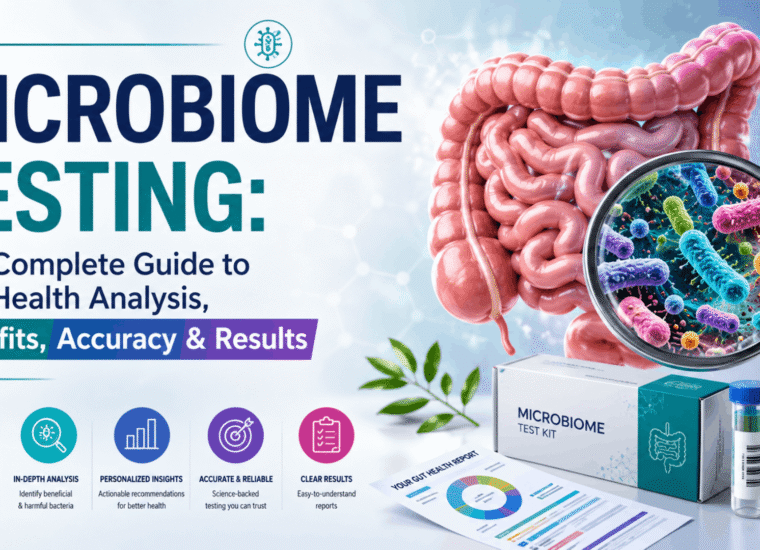
Microbiome testing can provide information about the microorganisms present in the gut and, depending on the technology used, their relative abundance and potential functional characteristics.
It can provide another layer of information alongside symptoms, diet, lifestyle and health history.
However, microbiome testing should not be viewed as a simple test that tells you which probiotic to buy.
The presence or absence of one microorganism does not automatically mean that a person needs a supplement containing it. Similarly, a low abundance of a particular organism does not by itself diagnose a disease.
The value of testing is in understanding the broader microbial ecosystem and putting the findings into context.
Useful questions include:
What microorganisms are present?
Are there patterns suggesting reduced microbial diversity or imbalance?
What might the microbial profile suggest about diet and microbial function?
Would dietary changes be more appropriate than adding microorganisms?
If a probiotic is considered, is there a scientific rationale for choosing particular strains?
This is especially relevant because probiotics enter an existing ecosystem. Two people with different microbiome profiles may not necessarily require the same intervention.
Microbiome testing therefore should not replace clinical assessment or be used to make exaggerated claims. When interpreted appropriately, it can contribute useful information to a personalized gut health strategy.
The sequence becomes more thoughtful:
Understand the individual → understand the microbiome → understand the diet and lifestyle → identify the health goal → choose the appropriate intervention.
Sometimes that intervention may be a probiotic.
Sometimes it may be increasing dietary fiber.
Sometimes it may be changing food diversity, improving lifestyle factors or addressing another underlying issue.
And sometimes, no probiotic may be necessary at all.
If a probiotic is appropriate, choose it for a specific reason.
First, identify the microorganism and strain. “Contains Lactobacillus” is not enough information.
Next, ask what health outcome has actually been studied.
Was the strain studied for IBS, constipation, antibiotic associated diarrhea or another defined condition?
Then consider the dose. A very high CFU count does not automatically make a product better. A well studied strain at an appropriate dose may be more useful than a large number of poorly characterized microorganisms.
Storage also matters. Some strains require refrigeration, while others are formulated for room temperature stability.
Finally, consider how long you intend to use it and what you expect it to achieve.
A probiotic should not become a permanent supplement simply because it is marketed as being “good for the gut.”
The goal is to match the right microorganism, in the right amount, for the right person and the right purpose.
The same principle applies to prebiotics.
Look at the type of substrate rather than simply the word “fiber” on the label.
Different prebiotic fibers can have very different effects.
Some people tolerate inulin well, while others experience considerable bloating. Resistant starch and other fermentable fibers may produce different responses.
Start gradually and allow the digestive system to adapt.
The same applies to food. You do not need to tolerate every food considered healthy in order to support a healthy microbiome.
The goal is to achieve as much dietary diversity as your individual digestive system comfortably allows.
One of the most common mistakes is assuming that every fermented food is a probiotic.
It is not.
Another is assuming that more strains or more CFU automatically means better results.
It does not.
A third mistake is increasing fiber dramatically overnight. A gradual increase is generally easier for the digestive system to tolerate.
It is also important to remember that not all fiber is prebiotic and that different prebiotics can produce different responses.
Perhaps the biggest mistake is treating gut health as something that can be fixed with one capsule.
The microbiome responds to the entire environment in which it exists.
Diet, sleep, physical activity, medications, stress, bowel transit and many other factors can influence it.
Microbiome science has moved well beyond the simple idea of “good bacteria versus bad bacteria.”
Researchers are increasingly interested in microbial function, not just the names and numbers of microorganisms present.
Two people can have different microbial communities while maintaining similar physiological functions. Conversely, people with similar microbial profiles may respond differently to the same food or supplement.
This is why the future of microbiome science is likely to be increasingly personalized.
The important questions are:
Which microorganism?
Which substrate?
Which person?
Which health condition?
Which dose?
Which outcome?
That approach is far more useful than asking everyone to take the same probiotic.
For most healthy people, probiotics are generally well tolerated.
Some people may experience temporary gas, bloating or changes in bowel movements, particularly when starting probiotics or increasing fermentable fiber.
However, probiotics are not appropriate for everyone. Rare cases of serious infections involving organisms used as probiotics have been reported, particularly in people who are severely ill or immunocompromised.
People with significant medical conditions should discuss probiotic use with an appropriate healthcare professional.
Persistent diarrhea, constipation, abdominal pain, blood in the stool, unexplained weight loss or severe bloating should not simply be treated by trying different probiotic products. These symptoms require appropriate medical assessment.
Probiotics and prebiotics are not competing approaches.
They influence the gut ecosystem in different ways.
Probiotics provide specific live microorganisms. Prebiotics provide substrates that selected microorganisms can use. Postbiotics involve inanimate microorganisms and/or their components that provide a health benefit.
Traditional fermented foods can fit beautifully into this picture.
Indian foods such as idli, dosa and dhokla demonstrate how sophisticated traditional fermentation practices can be. Because these foods are cooked after fermentation, they should not automatically be called probiotic foods. Their fermentation derived metabolites and microbial components may nevertheless contribute to their nutritional and biological properties.
For many people, the best place to begin improving gut health is not a supplement.
It is food diversity.
Eat a wide variety of vegetables, fruits, legumes, whole grains, nuts and seeds. Include traditionally fermented foods where appropriate. Increase fiber gradually. Pay attention to how your body responds.
For some people, a specific probiotic or prebiotic may have an important role when there is a clear reason and evidence supporting the particular intervention.
Microbiome testing may provide an additional layer of information when a more personalized approach is appropriate.
The future of gut health is unlikely to be about finding one probiotic that everyone should take.
It is more likely to be about understanding the interaction between the individual, their microbiome, their diet, lifestyle and health goals.
So instead of asking:
a better question is:
That shift, from choosing products to understanding the ecosystem, is at the heart of modern microbiome science.
Salminen S, et al. The International Scientific Association for Probiotics and Prebiotics consensus statement on the definition and scope of postbiotics. Nature Reviews Gastroenterology & Hepatology. 2021.